
Before we talk about the persimmon seed as a harbinger of winter, I just want to know one thing: Who was the first person to open a persimmon seed? Okay, two things: WHY?!
It’s a good bet no one has those answers, so let’s proceed.
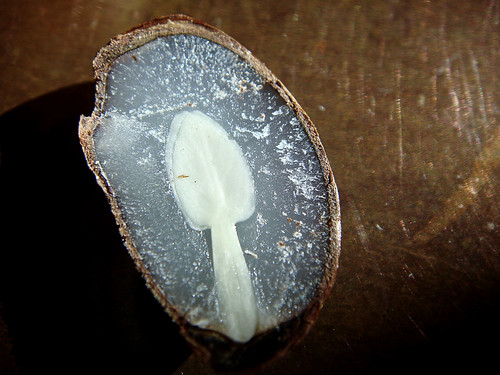
This “spoon” looks more like a Serv-All…Wonder what it means if I’d found a Spork??
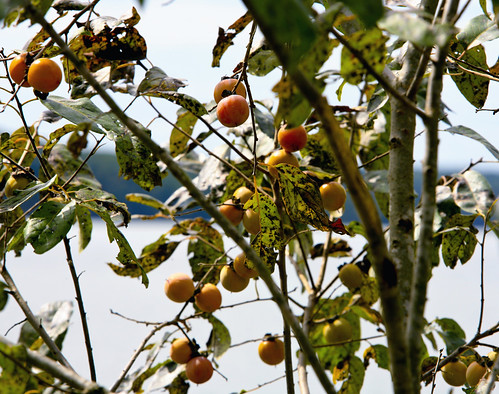
On my various road trips this fall I’ve noticed an abundance of persimmons. A trip to my parents’ ranch this weekend brought up the discussion about the old-timers method of predicting winter weather patterns by what the seed holds within.
I plucked some of the small ripe fruit, brought them home and proceeded to open a seed for myself. I’d never done this. Surprisingly, neither had my Dad. So he didn’t know to warn me I’d need my McGyver husband to help.
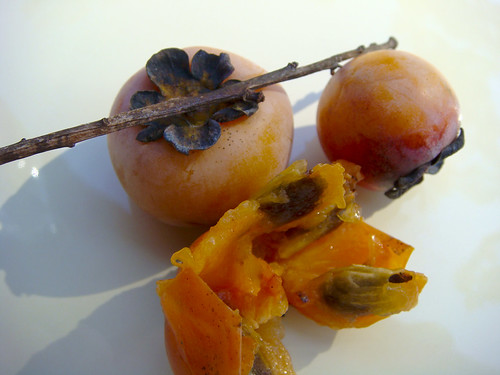
Persimmons were known to the ancient Greeks as the fruit of the gods. There are several varieties, but most have this distinctive (and very memorable) quality – the unripened fruit is so high in tannins, your mouth will be welded shut upon the slightest nibble of the fruit (technically a berry). It’s a common joke pulled on unsuspecting southern children, who will in almost all instances, eat anything. Of course, this never happened to me.
Captain John Smith said it best: “If it not be ripe it will draw a man’s mouth awire with much torment. But when it is ripe, it is as delicious as an apricot.”
The seeds from my wild persimmons are a bit larger than a watermelon seed, hard as a native pecan shell, slicker than snot (I’ve actually written a story about snot), and as I wondered above, perplexing as to why anyone would have wanted to cut one open. But someone did and over the years predictions about winter were spun around the tiny, but perfectly formed, creamy white utensil in the center.
From the Farmer’s Almanac Blog: “A knife shape will indicate a cold icy winter (wind cuts through you like a knife). A fork shape indicates a mild winter. A spoon shape stands for a shovel to dig out all the snow.”
You want to see for yourself? Here’s how. Find or buy several persimmons and remove the seeds. You’ll need more than one piece of fruit because I lost several seeds down the drain and elsewhere in the kitchen when they shot from my hand during the cleaning process. Talk about putting your eye out! Under running, warm water, clear the schmaaz and seed covering. Eventually a dark, shiny seed will emerge. Now for the really tricky part. After some trial and error, we found the best tool is a utility knife. Hold the seed on a flat surface with a pair of pliers and CAREFULLY take the tip and insert into the seed, then rock the knife back and forth around the seed. Don’t get in a hurry! It may take a few times to do this without destroying the “utensil” within.
I’ve now cut open 8 seeds (with no trip to the emergency room!) and it’s a given, we’ll be shoveling snow this winter – the seeds all contain spoons.
So what’s in your persimmon seed?!
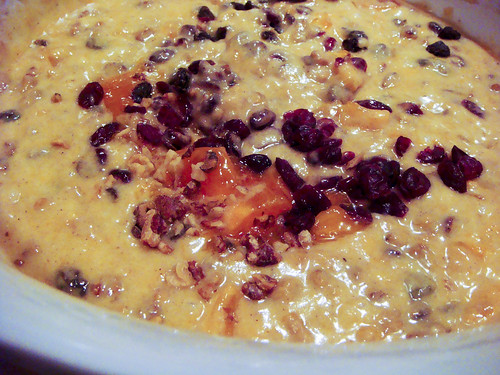
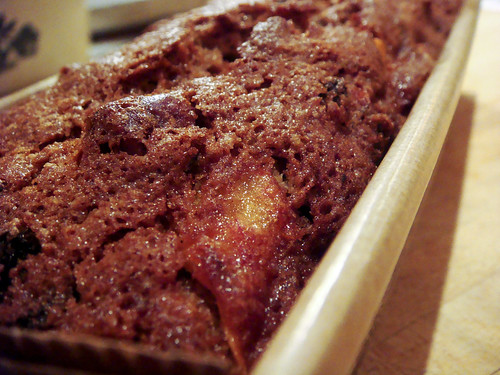
Persimmon Bread
Two 9-inch Loaves
Using the higher amount of sugar will produce a moister and, of course, sweeter bread.
Adapted from Beard on Bread by James Beard.
3½ cups sifted flour
1½ teaspoons salt
2 teaspoon baking soda
1 teaspoon ground nutmeg
2 to 2½ cups sugar
1 cup melted unsalted butter and cooled to room temperature
4 large eggs, at room temperature, lightly beaten
2/3 cup cognac, bourbon or whiskey
2 cups persimmon puree (from about 4 squishy-soft Hachiya persimmons)
2 cups walnuts or pecans, toasted and chopped
2 cups raisins, or diced dried fruits (such as apricots, cranberries, or dates)
1. Butter 2 loaf pans. Line the bottoms with a piece of parchment paper or dust with flour and tap out any excess.
2. Preheat oven to 350 degrees.
3. Sift the first 5 dry ingredients in a large mixing bowl.
4. Make a well in the center then stir in the butter, eggs, liquor, persimmon puree then the nuts and raisins.
5. Bake 1 hour or until toothpick inserted into the center comes out clean.
Storage: Will keep for about a week, if well-wrapped, at room temperature. The Persimmon Breads take well to being frozen, too.
[…] A Spoon In My Persimmon […]
Pingback by Persimmon Prediction Winter 2011-2012 — January 8, 2012 @ 6:50 pm
Chores not getting done…
I caught my niece checking out your blog instead of reading Moby Dick….
Trackback by Energy Metering — January 5, 2012 @ 2:40 pm
[…] first posted a persimmon bread recipe when I wrote about the persimmon seed being a harbinger of winter. I’ve since adapted that recipe because that’s what I do. […]
Pingback by Panforte and Persimmons: Road Trip Discoveries — November 18, 2011 @ 6:51 pm
[…] A Spoon In My Persimmon […]
Pingback by But First, Persimmons — November 17, 2011 @ 8:51 pm
Rattling great visual appeal on this site, I’d rate it 10.
Comment by Larry Taps — September 15, 2011 @ 12:11 am
very cool! i’ve not even THOUGHT abt the persimmon! we’ll have to find some and explore. thanks! really funny article.
Comment by jessiev — November 19, 2009 @ 1:38 pm
I’m so persimmon-ignorant! This is a great post for the P-newbie like me. Thanks for sharing!
Comment by Wanderluster — November 19, 2009 @ 9:52 am
persimmons are my top favorite fruit which i never ever get to indulge in because they just don’t import them to Central america, and they don’t grow them here. I get it sometimes when i go to the states, but even there it’s in seasons.
My mouth is watering for it!
Comment by marina k. villatoro — November 18, 2009 @ 6:13 pm
This is really interesting. I’ve eaten Persimmon without really knowing what it is (bought it in the market, but didn’t know it’s name) and I certainly didn’t know you could predict the weather from the seeds. I’m going to buy some now and do it with my children!
Comment by Victoria — November 18, 2009 @ 11:47 am
Oh my! You made me read this post so seriously as if I was busy in some operation ! 😛
Fun post and never heard of any such fruit. But looks like wanna have it. 😀
Comment by Nisha — November 18, 2009 @ 10:33 am
I finally figured it out……Schmazz. Your yiddish has a southern twang. The word is schmutz. Boy, I am glad I finally got that out of my brain…….
Comment by Headed Northeast — November 13, 2009 @ 2:47 pm
schmaaz? What the heck is Schmaaz?
Anyway, tell Jr that persimmons (the ones you find on the ground “”after the first freeze”” make for fantastic carp bait. It is tricky but you have to slip the hook into the fruit without squooshing it. Then you have to loosen the bail in order for you to toss the persimmon up in the air such that it makes a kerplunk sound; that draws the biggins in. You can’t cast them because they are so smushy. The trick is to find a tree growing next to a pond. This tree has for some time been dropping fruit in the water so the carp know what to look for. But you have to walk softly or you will spook the fish that are waiting for the next kerplunk.
Comment by Headed Northeast — November 3, 2009 @ 4:45 pm
Fun post! Always heard of it but have never seen it until now. Never climbed a mountain either until you took all of us with you! Keep it up!
Comment by Clay Mama — November 3, 2009 @ 8:51 am
Fun article Tammie! I’ve been a disciple of the persimmon as winter forecaster for many years.
Comment by tim cope — November 2, 2009 @ 11:10 pm
Shoveling snow this winter and pucker power, the persimmon is an amazing fruit (i mean berry). I never dreamed so much laughter could come from the query of such a small delight. Enjoyed the post very much. Will have to look for myself (thanks for the eye protection tip). Could be a new tradition in our house. Keep traveling. I learn so much.
Comment by Pops — November 2, 2009 @ 8:38 pm